Native American Heritage Month Reading List
November celebrates Native American Heritage Month! Check out some Talking Books to learn more about the history, diversity, and culture of the Indigenous peoples of North America.
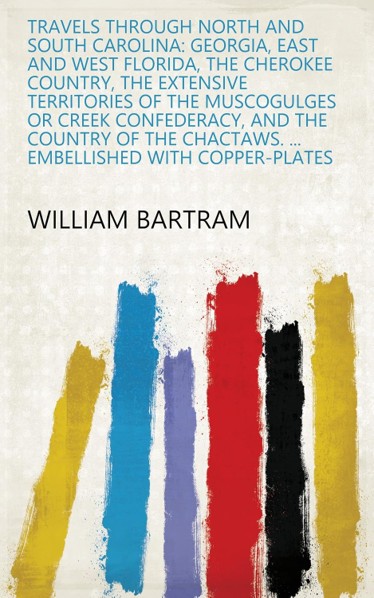
Travels and other writings: Travels through North and South Carolina, Georgia, East and West Florida ; Travels in Georgia and Florida, 1773-74: A report to Dr. John Fothergill; Miscellaneous writings
Collection of writings and drawings by writer, botanist, gardener, naturalist, and wilderness explorer William Bartram (1739-1823). Includes Travels through North and South Carolina, Georgia, East and West Florida (1791); Travels in Georgia and Florida, 1773-74: A Report to Dr. John Fothergill; and Miscellaneous Writings. Edited by Thomas P. Slaughter. 1996.
Book Length:
Digital Book Number: DB091440
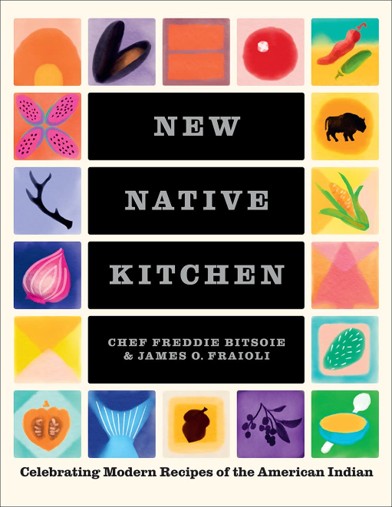
New Native kitchen: celebrating modern recipes of the American Indian
Chef Bitsoie and James Beard Award-winning author Fraioli present a collection of recipes celebrating Indigenous cuisine and food traditions of North America. Categories include soups, salads and vinaigrettes, vegetables and starches, land and sea, and puddings and sweets. Includes a list of pantry items typically found in Indigenous kitchens.
Book Length:
Digital Book Number: DB106243
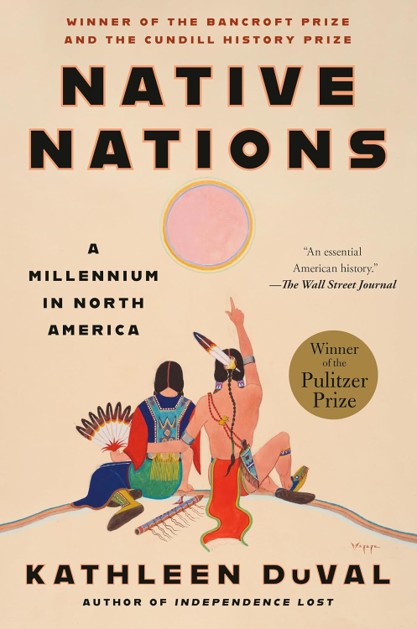
Native nations: a millennium in North America
In this magisterial history of the continent, Kathleen DuVal traces the power of Native nations from the rise of ancient cities more than 1000 years ago to the present. She reframes North American history, noting significantly that Indigenous civilizations did not come to a halt when a few wandering explorers or hungry settlers arrived, even when the strangers came well-armed. A millennium ago, North American cities rivaled urban centers around the world in size, but following a period of climate change and instability DuVal shows how numerous nations emerged from previously centralized civilizations. From this urban past, patterns of egalitarian government structures, complex economies and trade, and diplomacy spread across North America. And, when Europeans did arrive in the 16th century, they encountered societies they did not understand and whose power they often underestimated. For centuries, Indigenous people maintained an upper hand and used Europeans in pursuit of their own interests. In Native Nations, we see how Mohawks closely controlled trade with the Dutch and influenced global trade patterns and how Quapaws manipulated French colonists. With the American Revolution, power dynamics shifted, but Indigenous people continued to control the majority of the continent. The Shawnee brothers Tecumseh and Tenskwatawa built alliances across the continent and encouraged a controversial new definition of Native identity to attempt to wall off U.S. ambitions. The Cherokees created new institutions to assert their sovereignty to the U.S. and on the global stage, and the Kiowas used their preponderance of power in the west to regulate the passage of white settlers across their territory. The definitions of power and means of exerting it shifted over time, but the sovereignty and influence of Indigenous nations has been a constant.
Book Length:
Digital Book Number: DB121149
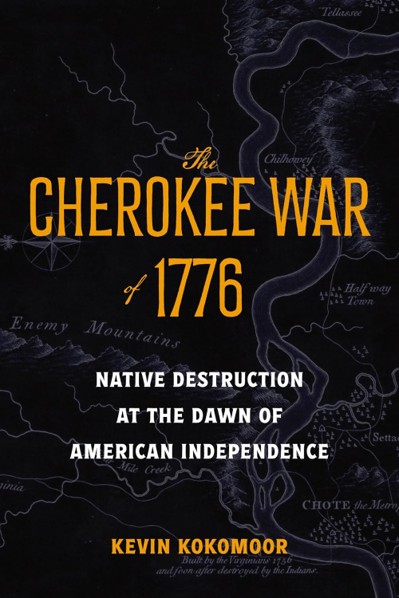
The Cherokee War of 1776: native destruction at the dawn of American independence
Americans remember 1776 as the year liberty was declared, the moment they cast off tyranny and proclaimed the self-evident truths of equality and freedom. But that same summer, as patriots celebrated their defiant new nation, American armies launched another campaign -- this one aimed at destroying the Cherokee nation. The Cherokee War of 1776 recasts America's founding moment by tracing the importance of westward ambition and settler violence to the origins of the Revolutionary War. In this gripping and sobering book, historian Kevin Kokomoor uncovers the rarely acknowledged war waged by the emerging United States against the Cherokee people just days after the Declaration of Independence was signed. Far from a spontaneous frontier skirmish, this war was a coordinated, state-backed campaign with a clear aim: seize Indigenous land and crush Native resistance. Many of the very men who championed liberty on parchment simultaneously advocated for the wholesale destruction of a sovereign Native nation. At the heart of this story is Cherokee resistance, which was strategic, determined, and deeply rooted in community dynamics. Figures like Dragging Canoe emerged to lead a movement that endured long after American armies had burned Cherokee towns to the ground. Kokomoor foregrounds Cherokee voices, motivations, and resilience, challenging the notion that they were merely pawns in a colonial struggle and forcing us to reckon with the real costs of independence and the long fight for Indigenous sovereignty.
Book Length:
Digital Book Number: DB138044
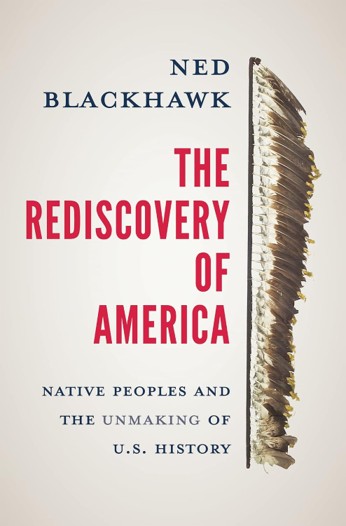
The rediscovery of America: native peoples and the unmaking of U.S. history
The most enduring feature of U.S. history is the presence of Native Americans, yet most histories focus on Europeans and their descendants. This long practice of ignoring Indigenous history is changing, however, with a new generation of scholars insisting that any full American history address the struggle, survival, and resurgence of American Indian nations. Indigenous history is essential to understanding the evolution of modern America. Ned Blackhawk interweaves five centuries of Native and non-Native histories, from Spanish colonial exploration to the rise of Native American self-determination in the late twentieth century. In this transformative synthesis he shows that: European colonization in the 1600s was never a predetermined success; Native nations helped shape England's crisis of empire; the first shots of the American Revolution were prompted by Indian affairs in the interior; California Indians targeted by federally funded militias were among the first casualties of the Civil War; the Union victory forever recalibrated Native communities across the West; twentieth-century reservation activists refashioned American law and policy. Blackhawk's retelling of U.S. history acknowledges the enduring power, agency, and survival of Indigenous peoples, yielding a truer account of the United States and revealing anew the varied meanings of America.
Book Length:
Digital Book Number: DB115217

Seed to plate, soil to sky: modern plant-based recipes using Native American ingredients
When these eight Native American plants crossed the ocean after 1492, the world's cuisines were changed forever. In Seed to Plate, Soil to Sky, James Beard Award-winning author and chef Lois Ellen Frank introduces the splendor and importance of this Native culinary history and pairs it with delicious, modern, plant-based recipes using Native American ingredients. Along with Native American culinary advisor Walter Whitewater, Seed to Plate, Soil to Sky shares more than 100 nutritious, plant-based recipes organized by each of the foundational ingredients in Native American cuisine as well as a necessary discussion of food sovereignty and sustainability. A delicious, enlightening celebration of Indigenous foods and Southwestern flavors, Seed to Plate, Soil to Sky shares recipes for dishes such as Blue Corn Hotcakes with Prickly Pear Syrup, Three Sisters Stew, and Green Chile Enchilada Lasagna, as well as essential basics like Corn Masa, Red and Green Chile Sauces, and Cacao Spice Rub. The "Magic 8" ingredients share the page-and plate-to create recipes that will transform your world.
Book Length:
Digital Book Number: DB116321

The Rediscovery of America: Native Peoples and the Unmaking of U.S. History
The most enduring feature of U.S. history is the presence of Native Americans, yet most histories focus on Europeans and their descendants. This long practice of ignoring Indigenous history is changing, however, with a new generation of scholars insisting that any full American history address the struggle, survival, and resurgence of American Indian nations. Indigenous history is essential to understanding the evolution of modern America. Ned Blackhawk interweaves five centuries of Native and non-Native histories, from Spanish colonial exploration to the rise of Native American self-determination in the late twentieth century. In this transformative synthesis he shows that: European colonization in the 1600s was never a predetermined success; Native nations helped shape England's crisis of empire; the first shots of the American Revolution were prompted by Indian affairs in the interior; California Indians targeted by federally funded militias were among the first casualties of the Civil War; the Union victory forever recalibrated Native communities across the West; twentieth-century reservation activists refashioned American law and policy. Blackhawk's retelling of U.S. history acknowledges the enduring power, agency, and survival of Indigenous peoples, yielding a truer account of the United States and revealing anew the varied meanings of America.
Book Length:
Digital Book Number: DB115217

Our Savage Neighbors: How Indian War Transformed Early America
Professor asserts that from the 1750s to the 1780s provincial leaders united the diverse European settlers of the rural mid-Atlantic colonies into a cohesive unit by using the fear and horror of Indian attacks. Posits that settlers became united against a common enemy and established democracy.
Book Length:
Digital Book Number: DB067329

The Longest Trail: Writings on American Indian History, Culture, and Politics
A collection of articles, speeches, papers, essays, and book introductions and chapters, provides a look at Native American history and policies related to their rights in North America. The time period covered stretches from the first settlements in the East to the long trek of the Nez Perce Indians in the Northwest.
Book Length:
Digital Book Number: DB085126

North American Indians: A Very Short Introduction
Historians describe how indigenous North Americans shaped their cultures so that they could flourish on the land. Perdue and Green stress the diversity and resilience of native societies and describe the ways Native Americans have struggled to maintain their integrity against attacks by European colonists and the United States government.
Book Length:
Digital Book Number: DB086321

A Brutal Reckoning: Andrew Jackson, the Creek Indians, and the Epic War for the American South
The Creek War is one of the most tragic episodes in American history, leading to the greatest loss of Native American life on what is now U.S. soil. What began as a vicious internal conflict among the Creek Indians metastasized like a cancer. The ensuing Creek War of 1813-1814 shattered Native American control of the Deep South and led to the infamous Trail of Tears, in which the government forcibly removed the southeastern Indians from their homeland. The war also gave Andrew Jackson his first combat leadership role, and his newfound popularity after defeating the Creeks would set him on the path to the White House. In A Brutal Reckoning, Peter Cozzens vividly captures the young Jackson, describing a brilliant but harsh military commander with unbridled ambition, a taste for cruelty, and a fraught sense of honor and duty. Jackson would not have won the war without the help of Native American allies, yet he denied their role and even insisted on their displacement, together with all the Indians of the American South in the Trail of Tears. A conflict involving not only white Americans and Native Americans, but also the British and the Spanish, the Creek War opened the Deep South to the Cotton Kingdom, setting the stage for the American Civil War yet to come. No other single Indian conflict had such significant impact on the fate of America-and A Brutal Reckoning is the definitive book on this forgotten chapter in our history.
Book Length:
Digital Book Number: DB118142

Indians of the Southeast: Then and Now
Conveys the religion, languages, life-style, food, games, dance, and music of the first Americans of the Southeast. Also tells of the arrival of the Europeans and the changes that took place as the Indians were outnumbered.
Book Length:
Digital Book Number: DB014782

An Indigenous Peoples' History of the United States
A history of the United States exploring the perspective of its indigenous peoples. Dunbar-Ortiz analyzes how native tribes actively resisted national expansion and examines the systematic destruction of the lives and cultures of the native civilizations present in North America before European colonization. Violence. 2014.
Book Length: 11 hours, 22 minutes
Digital Book Number: DB082383

A Snake Falls to Earth
Nina, a Lipan Apache, lives in the real world and still believes in the old stories. Oli, a cottonmouth snake boy, lives in the Reflecting World. But a catastrophic event on Earth, and a strange sickness that befalls Oli's best friend, drive their worlds together in ways they haven't been in centuries. Unrated. Commercial audiobook. For senior high and older readers. 2021.
Book Length: 11 hours, 22 minutes
Digital Book Number: DB082383

Firekeeper’s Daughter
Daunis, who is part Ojibwe, defers attending the University of Michigan to care for her mother. When Daunis witnesses a shocking murder, she reluctantly agrees to go undercover, drawing on her knowledge of chemistry and Ojibwe traditional medicine to track down the source of a new drug. Unrated. Commercial audiobook. For senior high and older readers. 2021.
Book Length: 14 hours, 16 minutes
Digital Book Number: DB102762

Braiding Sweetgrass: Indigenous Wisdom, Scientific Knowledge and the Teachings of Plants
Botanist and member of the Citizen Potawatomi Nation argues that the awakening of a wider ecological consciousness requires the acknowledgement and celebration of a reciprocal relationship with the world. Shares stories learned from her elders about the world around them and ways of approaching scientific inquiry. Commercial audiobook. 2013.
Book Length: 16 hours, 47 minutes
Digital Book Number: DB092274

As Long as Grass Grows: The Indigenous Fight for Environmental Justice, from Colonization to Standing Rock
Examination of the role of indigenous populations in the pursuit of environmental justice in the Americas from the seventeenth to the twenty-first century. Topics include explaining environmental justice theory, genocide, impacts of western expansion and the Industrial Revolution, sacred sites, and potential policies for the future. Unrated. Commercial audiobook. 2019.
Book Length: 7 hours, 11 minutes
Digital Book Number: DB096474

Native American Stories
Native Americans view human relationships with nature in terms of family with the Earth as mother. This collection of tales and myths from various Native American groups focuses on this relationship. Chapter titles include "Creation," "Earth," "Wind and Weather," and "Plants and Animals." For junior and senior high and older readers
Book Length: 2 hours, 45 minutes
Digital Book Number: DB034361